
Recent Posts
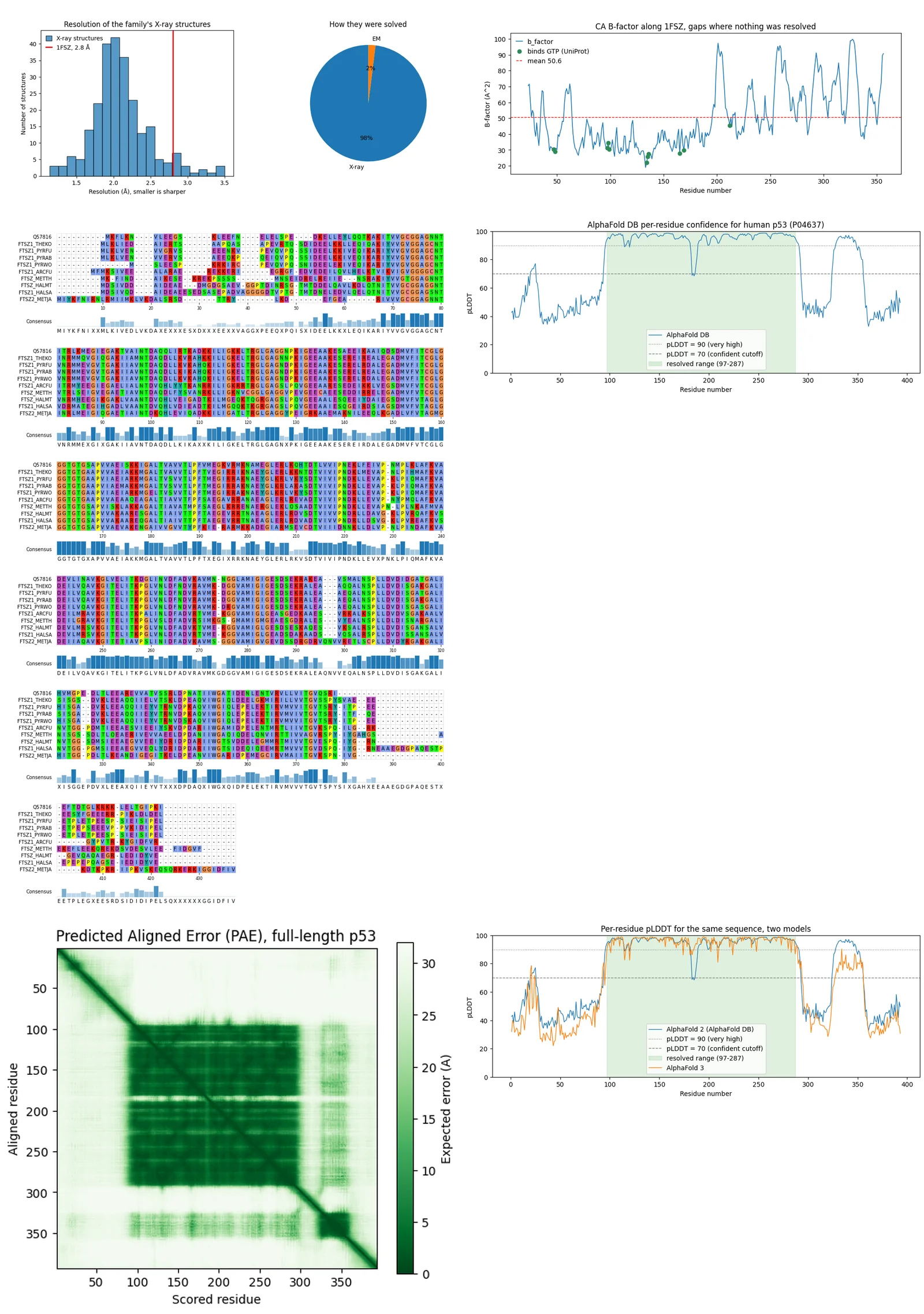
I’m part of the teaching team for the Bio Data Science program’s structural bioinformatics course at FHWN, split across the Wiener Neustadt and Tulln campuses. The materials I write for it live at structural-bioinformatics-exercises, and this post isn’t really about the repository — it’s about the idea that shaped it.
In a structural bioinformatics course, students look at proteins in PyMOL and dock ligands with AutoDock Vina, but neither tool shows them the forces involved. PyMOL doesn’t display forces, and Vina’s scoring function is hard to inspect without reading its source code. The idea that molecular dynamics is Newton’s second law applied many times in a row is easy to state in a lecture and hard to see in practice.
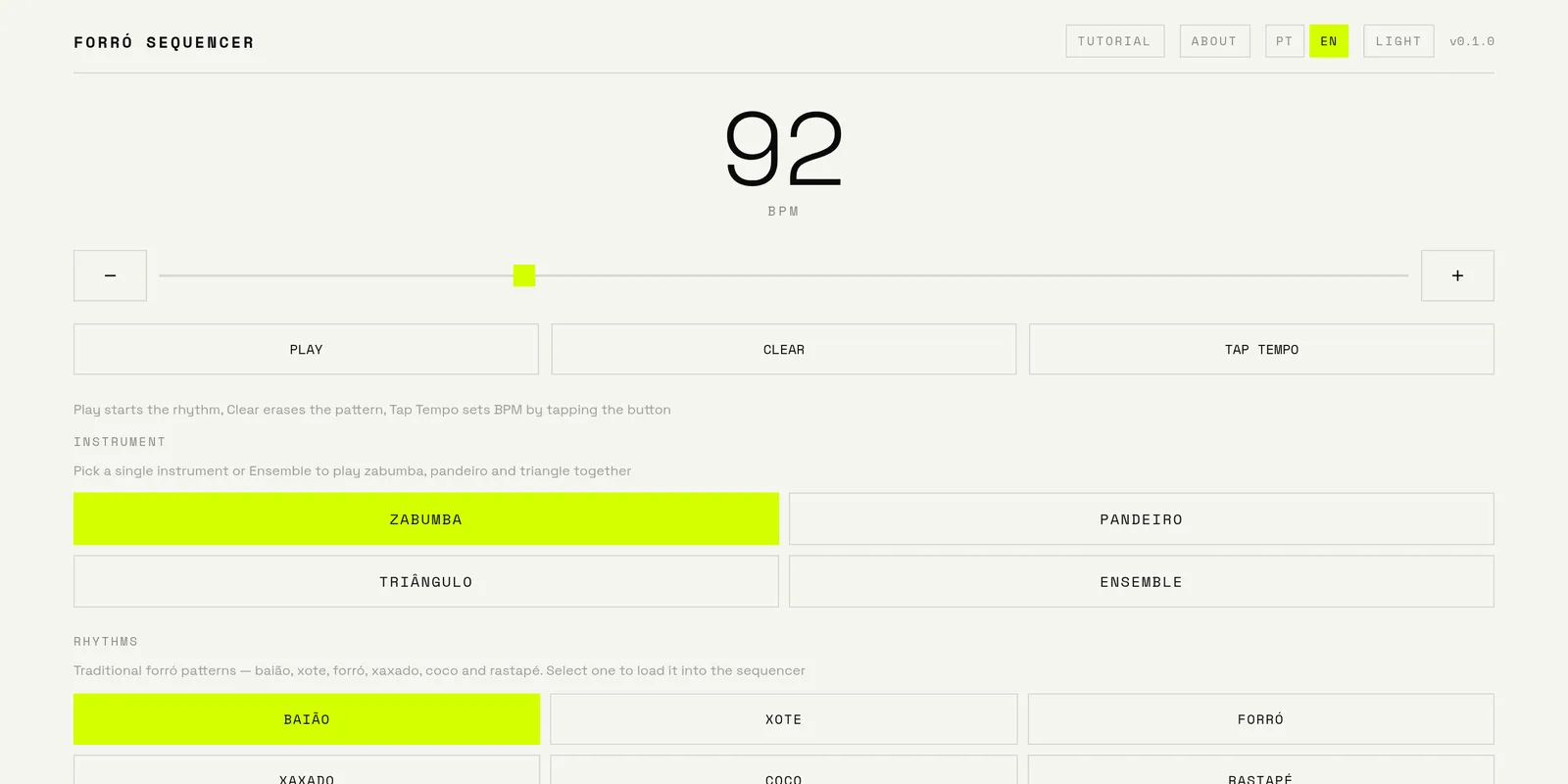
Forró isn’t just something I listen to — over the last while it’s become the connective thread across a handful of unrelated side projects. None of them started as a coordinated plan; each came from a different itch, and only in hindsight do they read as three angles on the same thing: playing it, learning it, and coding to it.

Dataframe operations form the foundation of modern data science workflows, yet researchers often face vendor lock-in when choosing between different dataframe frameworks. My work addresses this by developing a unified operations library that abstracts away framework-specific implementations. The challenge lies in handling the fundamental differences between these systems—some pandas-like dataframes use row-by-row operations, others employ lazy evaluation with native expressions, some require distributed execution patterns, while others focus on parallelization.
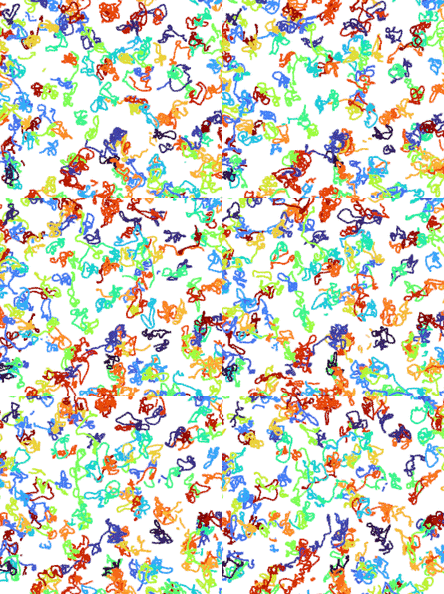
Most knowledge about proteins concerns structured proteins with specific functions. However, most proteins don’t have a particular or unique structure, and this doesn’t imply a lack of function. This makes IDPs incredibly interesting. The formation of protein-protein interactions underlies how proteins evolve to perform different functions.